How to Clean, Store and Reuse Custom Mini Flags Between Events
Custom mini flags last longest when fabric styles are spot cleaned by hand, dried completely and stored flat in a cool, dark box, while paper stick flags and food picks are treated as single-use. Custom Mini Flags makes both kinds, so this guide explains how to care for each style and when a worn set should be reordered.
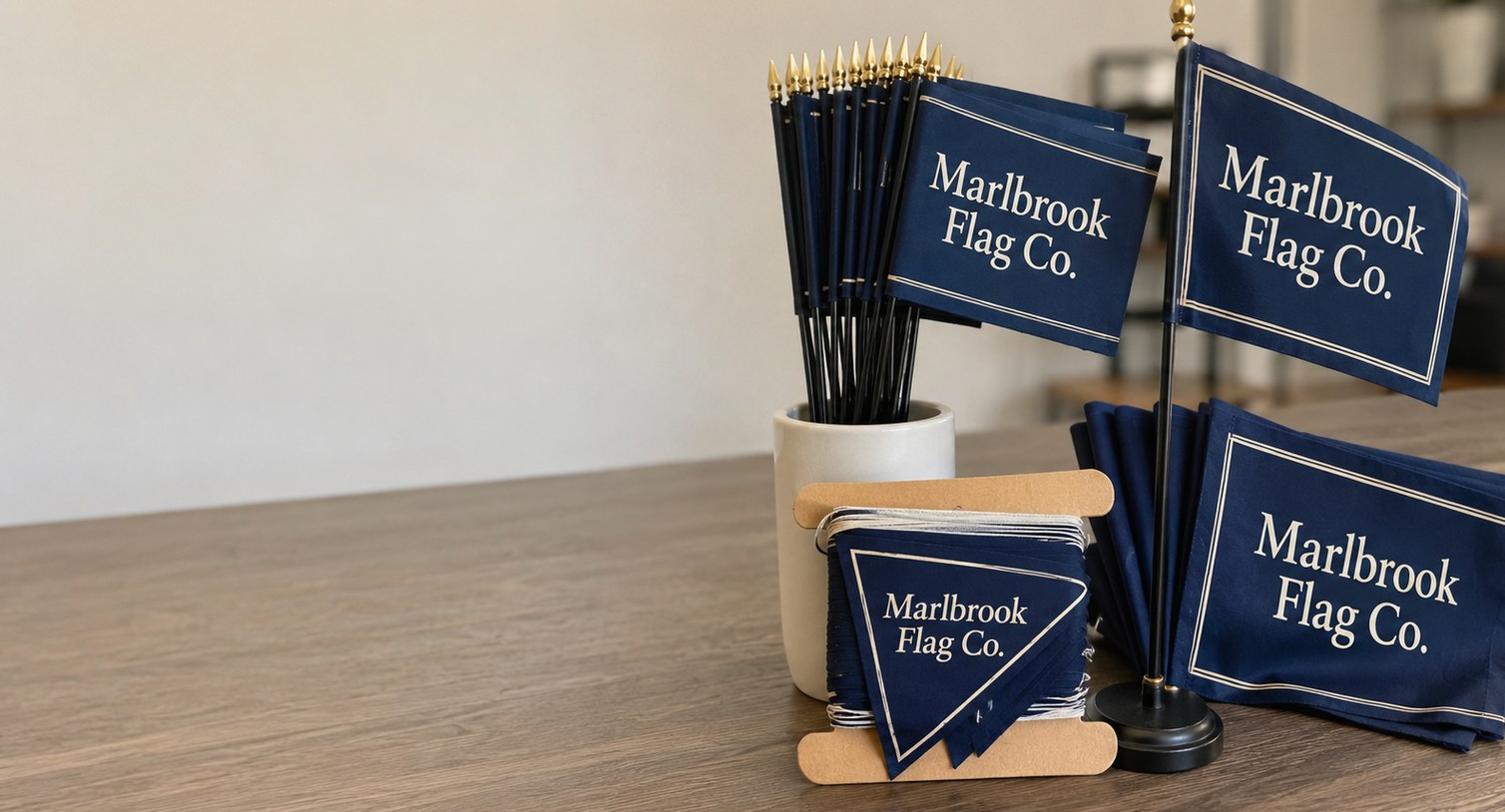
- Fabric hand flags, fan flags, bunting and desk flags are built for reuse
- Spot clean by hand, never machine wash or tumble dry
- Dry every flag completely before packing it away
- Paper stick flags and food picks are single-use
- Reorders get a free mockup within 24 hours and about 2 weeks turnaround
What are custom mini flags made of, and why does that change how you care for them?
Custom mini flags come in several materials, and each one needs different handling after an event. Sleeved hand stick flags, hemmed fan flags, sewn bunting and weighted desk flags use printed fabric and are built for repeat use. Economy paper stick flags and food-safe flag picks are made for a single event and are not meant to be cleaned or saved.
Knowing which group your flags belong to is the first care decision. Fabric styles reward a few minutes of attention after the event with seasons of extra use. Paper styles and picks are better treated as consumables: plan the quantity for the day, collect what is left and recycle or discard it. The table below sums up how each style that Custom Mini Flags makes should be handled.
| Style | Material | After the event | Reuse outlook |
|---|---|---|---|
| Hand-waving stick flags | Printed fabric sleeved onto a staff | Spot clean, air dry, store flat or loosely rolled | Good for repeat events |
| Large fan hand flags | Hemmed printed fabric | Shake out, spot clean, dry fully before packing | Good for repeat events |
| Bunting and string flags | Sewn fabric pennants on a line | Untie carefully, wind onto a card or tube | Good for seasonal reuse |
| Desk and table flags | Fabric flag on a weighted base | Dust, wipe the base, box upright | Long-term display |
| Paper stick flags | Printed paper on a stick | Collect and recycle or discard | Single event |
| Cocktail and food picks | Food-safe pick with a printed flag | Discard after serving | Single use |
How should fabric hand flags and fan flags be cleaned after an event?
Fabric hand flags and fan flags should be cleaned gently by hand, not scrubbed or tumbled. Start by shaking each flag out to remove dust, grass and confetti, then spot clean any marks with cool water and a small amount of mild soap on a soft cloth. Blot rather than rub, so the printed surface is not stressed.
Treat the staff and the sleeve as one unit. On sleeved hand stick flags the fabric is sewn to fit the staff, and pulling the panel off to wash it can stretch the sleeve so it no longer sits snugly. Clean the flag while it is still on the staff, keep water away from the joint where possible and wipe the staff itself with a damp cloth.
A few habits keep printed fabric looking sharp:
- Test any cleaner on a hem or corner before using it on the logo area.
- Avoid bleach, solvents and stain removers that could lift or dull the print.
- Skip the washing machine and dryer; agitation and heat are hard on hems and sleeves.
- Clean marks soon after the event, before they set into the fabric.
If a flag picks up a stain that will not come out with gentle spot cleaning, set it aside for practice runs or rehearsals and keep the cleanest flags for the public-facing moments.
How do you dry and de-wrinkle custom mini flags without damaging the print?
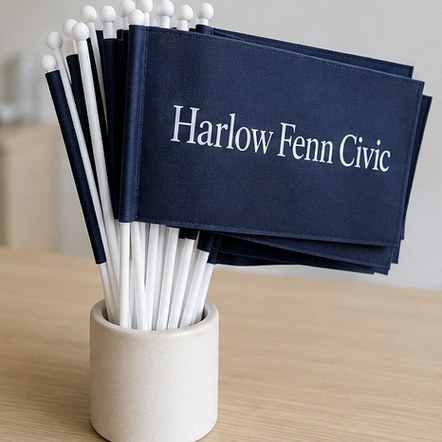
Custom mini flags should always air dry completely before they are packed away. Lay fabric flags flat on a clean towel or hang them by the staff in a shaded, ventilated room. Packing a flag while it is still damp is the most common way a reusable set is ruined, because trapped moisture can leave musty smells, spots and creases that set in.
After a rainy parade or a humid outdoor event, open every carton the same day. Stand hand flags upright in a bucket or box with the fabric free to breathe, spread fan flags across a table and unwind bunting so the pennants are not pressed together. Keep drying flags out of direct sun, which can fade printed colors over time, and away from heaters that can warp a staff.
To remove wrinkles, a handheld steamer held a short distance from the fabric is the gentlest option. If you use an iron, choose a low setting, place a pressing cloth between the iron and the flag and work from the back of the fabric. Try a hem first. Never press directly on the printed logo, and never iron a flag while it is attached to a plastic staff.
What is the best way to store custom mini flags between events?
The best way to store custom mini flags is clean, dry, flat or loosely rolled, in a closed box kept in a cool, dark indoor space. Light, heat, damp and weight are the four things that shorten a flag’s life in storage, so the right spot is usually an office cabinet or interior closet rather than a garage, attic or vehicle.
Group flags by style and by design so they are easy to pull for the next event. Hand flags can lie side by side with staffs alternating direction so the fabric panels do not crush each other. Fan flags store well flat between sheets of plain paper. Avoid rubber bands around the fabric, which can leave pressure marks, and avoid stacking heavy items on top of the box.
- Count the flags you are putting away and write the number on the box.
- Label the box with the design, the style and the event it was used for.
- Add a note of any flags set aside as worn so they are not handed out by mistake.
- Store the box off the floor, away from windows, pipes and heat sources.
- Check the box a few weeks before the next event so there is time to reorder.
Keeping the original shipping carton from Custom Mini Flags helps, because it is already sized for the order and keeps the flags from shifting.
How should bunting and desk flags be packed away?
Bunting and desk flags need their own packing methods because of their shape. Sewn bunting tangles easily, so wind each strand around a piece of stiff card or a cardboard tube, starting from one end and keeping the pennants facing the same way. Tuck the loose end under the last wrap and label the card with the strand length or the room it decorated.
Take bunting down by untying it rather than pulling it off hooks, nails or railings, which can snag the line or tear a pennant. If the strand was outdoors, let it dry fully before winding it up, for the same reasons as any fabric flag.
Desk and table flags are usually displayed for months at a time, so their care is about dust and handling. Wipe the weighted base with a dry or slightly damp cloth, dust the fabric with a soft brush and keep the display out of strong window light if the color matters. When moving desk flags, lift them by the base rather than the pole, and box them upright with paper around the fabric so the flag is not bent or creased in transit.
Which custom mini flags are single-use, and how should they be handled?
Economy paper stick flags and food-safe cocktail and food picks are the single-use custom mini flags in the range. Paper stick flags are designed for large, one-day giveaways, and paper is not something you can wash or steam back into shape. Food picks are made for serving food and should be thrown away after use rather than collected for another event.
Single-use does not mean careless. A few steps make these styles work better on the day:
- Keep paper stick flags in their carton until hand-out time, away from spilled drinks and wet ground.
- At outdoor events, have a covered table or tent where volunteers can stage the flags.
- Collect unused paper flags at the end of the day while they are still dry and flat, and store them like any paper goods if the design is not dated.
- For food picks, store unopened packs in a clean, dry place and keep opened packs covered in the kitchen.
If your event will be outside in uncertain weather, or the same flags need to appear again next season, a fabric style is usually the better buy. The paper vs fabric comparison covers that decision in more detail.
When should reusable mini flags be retired and reordered?
Reusable mini flags should be retired when the print has visibly faded next to a fresh flag, the hem or sleeve has started to separate, or the staff no longer holds the fabric firmly. A worn flag in a photo or a welcome line says more about the event than about the flag, so it is worth replacing a set before it looks tired.
A simple check before each event helps: lay one flag from storage beside your brand guide or a new printed piece and compare the color, then tug lightly on a few sleeves and hems. If several flags fail, plan a reorder rather than mixing old and new flags in the same line.
Reordering is straightforward when the artwork is already on file. Send your request through the quote form, mention the original design and any updates, such as a new year or sponsor, and Custom Mini Flags returns a free mockup within 24 hours. You pay nothing until you approve the design, revisions are unlimited and free, and standard turnaround is about 2 weeks after approval, with faster turnaround available through express shipping. The how it works page walks through each step.
Frequently asked questions
Can fabric mini flags be washed in a washing machine?
Fabric mini flags are best cleaned by hand rather than in a washing machine. Agitation and dryer heat put stress on hems, sewn sleeves and the printed surface. Spot clean marks with cool water, a little mild soap and a soft cloth, blot instead of rubbing and let each flag air dry completely. Custom Mini Flags recommends testing any cleaner on a hem before the logo area.
How do I get creases out of sleeved hand stick flags?
Sleeved hand stick flags respond best to a handheld steamer held a short distance from the fabric. If you prefer an iron, use a low setting, place a pressing cloth over the flag and work from the back, testing on a hem first. Never press directly on the printed logo, and remove creases only after the flag is fully dry.
Can weighted desk flags be cleaned without taking them apart?
Weighted desk flags can be cleaned in place without removing the flag from the pole. Wipe the base with a dry or slightly damp cloth, brush dust off the fabric with a soft brush and avoid spraying cleaners near the printed flag. Lift the display by the base when moving it, so the pole and flag are not bent or pulled loose.
Are custom food picks safe to collect and reuse at another event?
Custom food picks are made for serving food once and should be discarded after use, not collected for another event. Unopened packs can be kept for later if they stay sealed in a clean, dry place. Custom Mini Flags makes cocktail and food picks for caterers, restaurants and hosts who want branded presentation on each tray without washing anything afterward.
What is the easiest way to keep custom bunting from tangling in storage?
Custom bunting stays tangle-free when each strand is wound around a piece of stiff card or a cardboard tube. Start at one end, keep the pennants facing the same way and tuck the loose end under the last wrap. Label each card with the room or display it came from, so the next setup goes up quickly and in the right order.
What damages custom mini flags most while they are in storage?
Custom mini flags are damaged most in storage by damp, direct light, heat and weight. Damp packing can leave spots and musty smells, sunlight can fade printed colors, heat can warp staffs and heavy boxes on top can crush fabric panels. A closed box on a shelf in a cool, dark indoor room avoids nearly all of these problems.
Can fabric mini flags be packed away wet after a rainy event?
Fabric mini flags should never be packed away wet, even for one night. Open every carton on the day of the event, stand hand flags upright with the fabric free to breathe and spread fan flags and bunting out in a shaded, ventilated room. Once every flag is completely dry, pack the set flat or loosely rolled in a closed box.
Should hemmed fan flags be stored flat or rolled?
Hemmed fan flags store best flat, ideally between sheets of plain paper inside a closed box, so the fabric does not pick up hard creases. Loose rolling also works when space is tight, as long as nothing heavy sits on top. Custom Mini Flags makes large fan hand flags with hemmed edges, which hold their shape well when stored flat between uses.
How can I tell when a set of reusable mini flags needs replacing?
Reusable mini flags need replacing when the print looks faded next to a fresh piece, hems or sleeves have started to separate or the staff no longer holds the fabric firmly. Check one flag against your brand guide before each event. Custom Mini Flags keeps the reorder simple with a free mockup within 24 hours and about 2 weeks standard turnaround.
Can marks or stains be cleaned off paper stick flags?
Paper stick flags cannot really be cleaned, because water and rubbing will soften the paper and smear or lift the print. A paper flag with a mark is best recycled or discarded. To keep paper flags presentable on the day, leave them in their carton until hand-out time and stage them on a covered table away from drinks and wet ground.
Is a car trunk or garage a good place to keep mini flags between events?
Mini flags are better kept indoors than in a car trunk or garage between events. Vehicles and garages swing between heat, cold and damp, which can warp staffs, fade printed colors and encourage musty smells in fabric. An interior closet, office cabinet or storeroom shelf away from windows and pipes keeps a reusable set ready for the next event.
Should I keep the original carton from my mini flag order?
Keeping the original carton from a mini flag order is a good idea, because it is already sized to the set and stops flags from shifting or crushing in storage. Label it with the design, style, count and event. Custom Mini Flags ships each order packed for transit, so the same carton usually works well on a shelf between uses.
Get a free mockup for your mini flags
Send your logo or idea and the quantity you have in mind. Custom Mini Flags returns a free mockup within 24 hours, you approve the design before anything is produced, and standard turnaround is about two weeks with faster options available. Get a custom quote.